Which Cars Can I Import from Japan?

Which cars can I import from Japan? It is the first question most people ask us, and the answer is simpler than it looks. Almost every car imported from Japan into Australia comes in under one of two schemes: the Specialist and Enthusiast Vehicle Scheme (SEVS), or the 25 years or older classic car scheme.
The 1993 Toyota Land Cruiser Prado 78 Series above, with 220,000 km, is a good example. We imported it to order from Japan under the 25-year rule, and our KZJ78W Prado buying guide covers what to look for in one. Below we explain how each scheme works, how a car moves through each one, how the two compare, and how to use our import catalogue to see which cars can be imported.
In this guide
- Which cars can I import from Japan? The two main schemes
- Cars need to be close to original condition
- The SEVS scheme: for cars under 25 years old
- The 25 years or older scheme: for classic cars
- SEVS and the 25-year rule compared
- Our import catalogue: see what can be imported
- How we check eligibility for every car
- Frequently asked questions
- Getting started
Which cars can I import from Japan? The two main schemes
- SEVS. For newer cars, under 25 years old. The model has to be listed on the SEV register, and the car is complied to an approved blueprint by a Registered Automotive Workshop.
- 25 years or older. For classic cars built more than 25 years ago. No SEV register entry is needed, and the car is brought up to the standards its state requires before registration.
There are a few other import options, such as for people moving to Australia with a car they already own, but SEVS and the 25-year rule cover the cars nearly all of our clients import. The rules are set by the federal Department of Infrastructure, and its page on importing a vehicle into Australia is the official starting point.
Cars need to be close to original condition
Whichever scheme a car comes in under, it needs to be in close to original condition. For a SEVS car, the compliance blueprint is written for the standard car, so major modifications can make a car difficult or impossible to comply.
For an older car, the government’s rules say it must not have been significantly modified in the last 25 years, which includes changes to the body, chassis, drivetrain, brakes or steering. A car that has been significantly modified in that time is no longer treated as an older vehicle.
Damage and rust matter too. Accident damage, poor repairs or corrosion can cause issues when the car is certified in Australia, and can add cost or even stop a car from being complied. That is why the condition of the individual car matters as much as the model.
That is why we check every car’s auction sheet, photos and any notes about modifications before a client bids. Our guide on how to read a Japanese auction sheet shows what we look for.
The SEVS scheme: for cars under 25 years old
SEVS lets Australians import specialist and enthusiast cars that were never sold new here. A model can only be imported under SEVS if it is listed on the Register of Specialist and Enthusiast Vehicles, known as the SEV register. To be listed, a model has to meet criteria such as high performance, environmental performance, mobility features or rarity, as set out on the Department’s SEV page.
Each register entry covers specific variants and build dates, and the model also needs an approved Model Report, the engineering blueprint that sets out exactly how the car is modified to meet the Australian Design Rules. The work is done by a Registered Automotive Workshop (RAW) and checked before the car is entered on the Register of Approved Vehicles (RAV). Our SEVS guide covers all of this in detail.

The 25 years or older scheme: for classic cars
Once a car was built more than 25 years ago, it can be imported under the older vehicle rules without needing a SEV register entry. The age is based on the car’s build date, which is why we always confirm the exact build month before buying. The Department explains the details in its guide on how to import a vehicle 25 years or older.
The eligibility date is calculated from the month the car was produced in Japan, not the year it was first registered. For example, an R34 Skyline built in March 2001 becomes eligible in March 2026, while one built in November 2001 has to wait until November 2026, even though both may have been registered in the same year. If the build month cannot be shown, the Department assumes December of the build year. Our portal’s month-of-production check, shown in our guide on where to view Japanese car auctions, is one of the ways we confirm it.
A common misconception is that a 25-year-old car skips the Australian standards. It does not. Each state sets its own requirements for registration, and generally an older car has to meet the Australian Design Rules that applied at its build date, as if it had been sold new here at the time. There is no ready-made blueprint as there is under SEVS, so the work each car needs is assessed individually.

SEVS and the 25-year rule compared
| SEVS | 25 years or older | |
|---|---|---|
| Which cars | Newer cars whose model is on the SEV register | Cars built more than 25 years ago |
| What decides eligibility | A current SEV register entry and approved Model Report covering the car’s variant and build date | The car’s build date, and no significant modifications in the last 25 years |
| Condition | Close to original, so it can be complied to the Model Report | Close to original, or it may lose its older vehicle status |
| Import approval | Concessional RAV entry approval, before shipping | Concessional RAV entry approval for an older vehicle, before shipping |
| How it meets Australian standards | Modified by a Registered Automotive Workshop to the approved Model Report | Modified as each state requires, generally to the ADRs that applied at its build date |
| Before registration | Entered on the RAV, then a roadworthy | Entered on the RAV, then any state requirements and a roadworthy |
| Examples | Toyota Crown Hybrid (GWS204), Lancer Evolution VIII, WRX STI (VAB) | Land Cruiser Prado (KZJ78W), Skyline R32 GT-R, Land Cruiser 80 Series |
Some models qualify under both. The R34 Skyline GT-R is on the SEV register, and its earliest cars have also passed 25 years, so the right route depends on the exact car.
Our import catalogue: see what can be imported
To make it easy for anyone to see which cars can be imported, we are building and maintaining an import catalogue of the Japanese cars people import into Australia. Each model is tagged as SEVS listed, 25-Year Rule eligible, or both, and you can filter by make, model, chassis code and category, from performance cars to kei trucks and campervans. New models are added regularly.

Every SEVS model in the catalogue shows its SEV register entry number, criterion and expiry date, with a link to the official listing, so you can check the details for yourself.

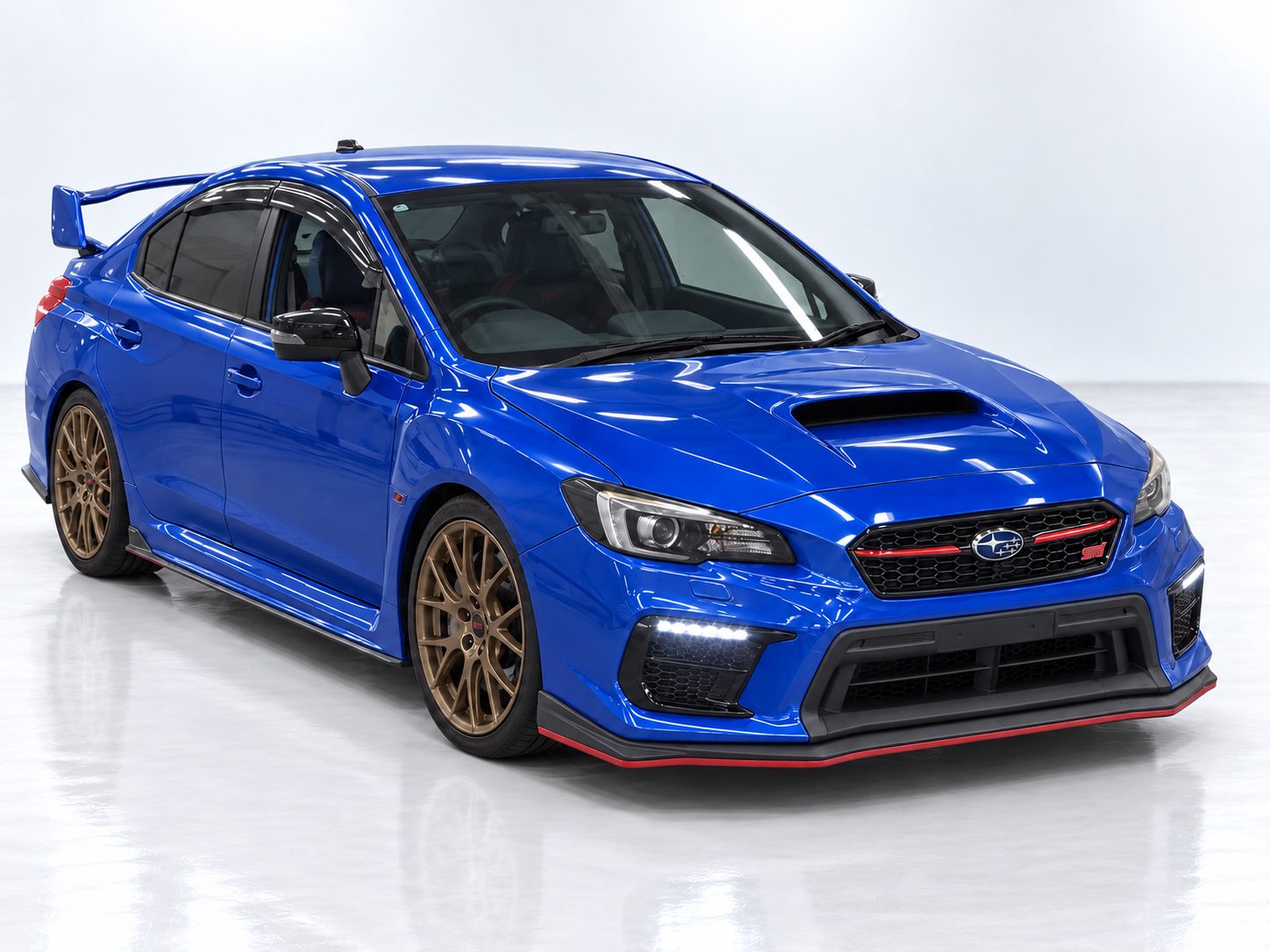
A few popular SEVS cars


A few popular 25-year-old classics


Catalogue photos are for illustration. Each car’s actual condition and specification is confirmed once a specific car is sourced.
How we check eligibility for every car
A model being in the catalogue, or on the SEV register, is the starting point. Before a client bids, we check the individual car: its exact build date, its variant and grade, its condition and any modifications, and for SEVS cars, that a current register entry and Model Report cover it. We organise all of the paperwork on our clients’ behalf, from the import approval to compliance and registration.
It is important that all of the paperwork, from start to finish, is done in the right way and at the right time. Mistakes along the way can lead to delays, surprise costs or a car that cannot be registered. That is why it pays to be careful and to use a knowledgeable importer when you are looking to import your next car.
The easiest way to start is our $250 car search. It gives you access to the latest Japanese auction and dealer listings and our daily monitoring service, and we check eligibility for every car we send you. Our guides to what it costs to import a car from Japan and how long it takes cover the rest of the process.
Frequently asked questions
What cars are legal to import from Japan?
Most cars imported from Japan come in under one of two schemes. Cars under 25 years old can be imported if their model is on the SEV register and covered by an approved Model Report. Cars built more than 25 years ago can be imported under the older vehicle rules. In both cases the car needs to be close to original. Our import catalogue shows which scheme popular models fall under.
What is the 25-year rule in Australia?
The 25-year rule allows a car built more than 25 years ago to be imported without a SEV register entry, provided it has not been significantly modified in the last 25 years. It still needs an import approval before shipping, and it must meet the registration requirements of its state, generally the Australian Design Rules that applied at its build date.
Can I import a car less than 25 years old to Australia?
Yes, if the model is listed on the SEV register and the car’s variant and build date are covered by a current entry and an approved Model Report. It is then complied by a Registered Automotive Workshop. If a newer model is not on the register, it generally has to wait until it turns 25.
What cars will be legal to import in 2026?
Under the 25-year rule, cars built in 2001 reach 25 years old during 2026, with each car becoming eligible once it passes 25 years from its build date. That includes later examples of models such as the R34 Skyline, the S15 Silvia and the FD RX-7. Always confirm the exact build date before buying.
Can I buy a car in Japan and bring it to Australia?
Yes, as long as the car is eligible under one of the import schemes and an import approval is granted before it is shipped. A car shipped without an approval can be held at the border. We organise the purchase, import approval, shipping, clearance and compliance for our clients.
Which car is best to import from Japan?
It depends on what you want from the car and your budget. Popular choices range from performance cars like the Skyline GT-R and Lancer Evolution, to comfortable sedans like the Toyota Crown, to 4WDs like the Land Cruiser. Our import catalogue is a good place to compare them.
Getting started
If you have a car in mind, check it in our import catalogue, then start your $250 car search and we will find eligible cars that suit you. If you would rather talk it through first, call us on +61 404 312 508.
Import eligibility disclaimer: this article provides general information only and reflects our understanding of the Road Vehicle Standards framework at the time of writing. It is not legal or compliance advice. Fukasawa Car Imports does not warrant or guarantee that any vehicle is eligible for import, entry on the SEV register, compliance or registration in Australia. Eligibility is determined solely by the Australian Government and state and territory registration authorities, and SEV register entries, Model Reports and regulations can change, be amended or expire without notice. Eligibility shown in our catalogue is general information only. Always confirm current eligibility for a specific vehicle on the official SEV register and with our team before purchasing. Nothing in this article excludes any right that cannot lawfully be excluded under the Australian Consumer Law.
Find us on socials
Our contacts