
Honda Civic Type R (EK9)
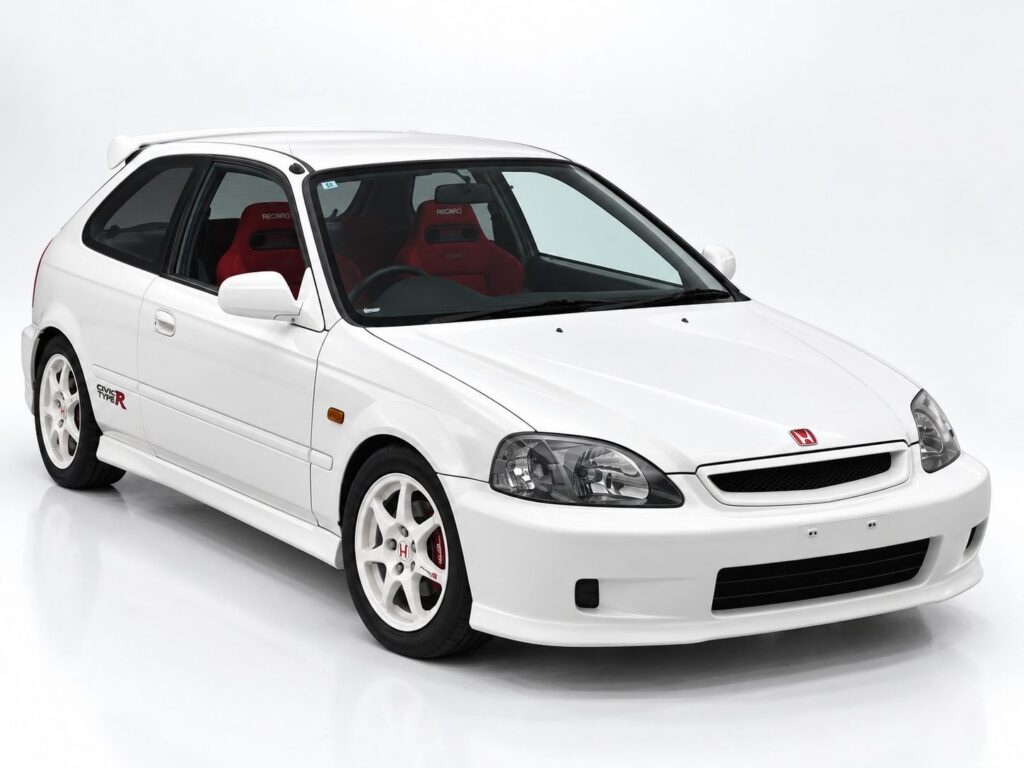
Specifications
- Make
- Honda
- Model
- Civic Type R
- Chassis Code
- EK9
- Year Range
- 1997-2000
- Category
- Performance, Hatch and Sedans
- Drivetrain
- FWD
- Fuel Type
- Petrol
- Transmission
- Manual
- Engine
- B16A
- Eligible For Import Under
- 25 years or older classic car scheme *
* Import eligibility disclaimer: eligibility shown is general information only, is not guaranteed, and is determined solely by the Australian Government and subject to change without notice - please confirm current eligibility for this vehicle with the Fukasawa Car Imports team before purchasing. Nothing here excludes any right that can't lawfully be excluded under the Australian Consumer Law.
Image disclaimer: photos shown are for illustration only and do not depict the actual vehicle you will receive. Images may be sourced from Japanese auction listings and edited, including AI-assisted retouching, for clarity - actual condition, colour, trim and equipment will vary by vehicle and are confirmed only once a specific car is sourced on your behalf. Nothing here excludes any right that can't lawfully be excluded under the Australian Consumer Law.
Popular colour options:
Gallery
About Honda Civic Type R:
The Honda Civic EK9 Type R is one of the most important performance Hondas of the 1990s and the first Civic to receive the Type R treatment. Introduced in Japan in 1997, it transformed the practical Civic hatchback into a focused performance car, combining low weight, a high-revving VTEC engine and a driver-focused chassis.
Available in several factory revisions:
1997–1998 — Original Type R — The first EK9, powered by the 1.6L B16B DOHC VTEC producing 185 PS at 8,200 rpm, paired with a close-ratio 5-speed manual and helical LSD. It also featured Type R-tuned suspension, larger brakes, lightweight 15-inch wheels and extensive weight-saving measures. Depending on equipment, air conditioning and other comfort features could be omitted to reduce weight.
1998–1999 — Facelift Type R — The major exterior and equipment revision, retaining the B16B and core Type R mechanical package while introducing updated styling and equipment. These cars are commonly identified by the EK9-110 chassis-number range.
1999–2000 — Type Rx — The final EK9 revision, commonly identified by the EK9-120 chassis range. The Type Rx added considerably more everyday equipment, including air conditioning, power windows, remote central locking, electric folding mirrors and CD audio, while retaining the B16B Type R drivetrain.
At the heart of the EK9 is the B16B DOHC VTEC, producing an extraordinary 185 PS from just 1.6 litres and revving beyond 8,000 rpm. Combined with the Civic’s low weight, front-wheel drive and factory helical LSD, it created an exceptionally responsive and engaging performance car without relying on turbocharging.
Honda’s Type R philosophy extended throughout the car, with Recaro bucket seats, Type R-specific instrumentation, Momo steering wheel and a lightweight-focused interior. The result was a Civic that could remain practical while delivering a level of performance and driver involvement normally associated with dedicated sports cars.
The EK9 also became deeply embedded in Japanese motorsport, tuning culture, Initial D and racing games, helping establish the Civic Type R as an international enthusiast icon.
Today, original JDM EK9 Type Rs are increasingly sought after by enthusiasts and collectors, particularly well-preserved, unmodified examples. For Australian buyers, the EK9 remains an attractive JDM import from Japan, offering a genuine example of Honda’s early Type R philosophy.
With production ending in 2000, EK9s are now comfortably more than 25 years old. Qualifying examples may also be eligible for Victoria’s Club Permit Scheme, subject to VicRoads requirements and the applicable import, safety and vehicle-standard requirements.
The EK9 ultimately established the formula that would define Honda’s Type R legacy: lightweight construction, naturally aspirated high-revving power, a manual LSD-equipped drivetrain and a chassis built around driver involvement.